
When autumn’s crisp air begins to sweep through, it’s time for comforting meals that bring warmth and joy. Imagine walking into your kitchen, and the fragrant aroma of slow-cooked turkey legs fills the room, instantly transporting you to your favorite holiday memories. This easy recipe promises juicy, fall-off-the-bone turkey legs with crispy, buttery skin, making it the perfect solution for your Thanksgiving feast. With minimal prep time, you can easily free up oven space for all your beloved side dishes while treating your loved ones to a savory delight. Ready to create a meal that showcases the magic of home-cooked comfort? Let’s dive into the world of slow-roasted turkey legs that will not only impress but leave everyone craving seconds!
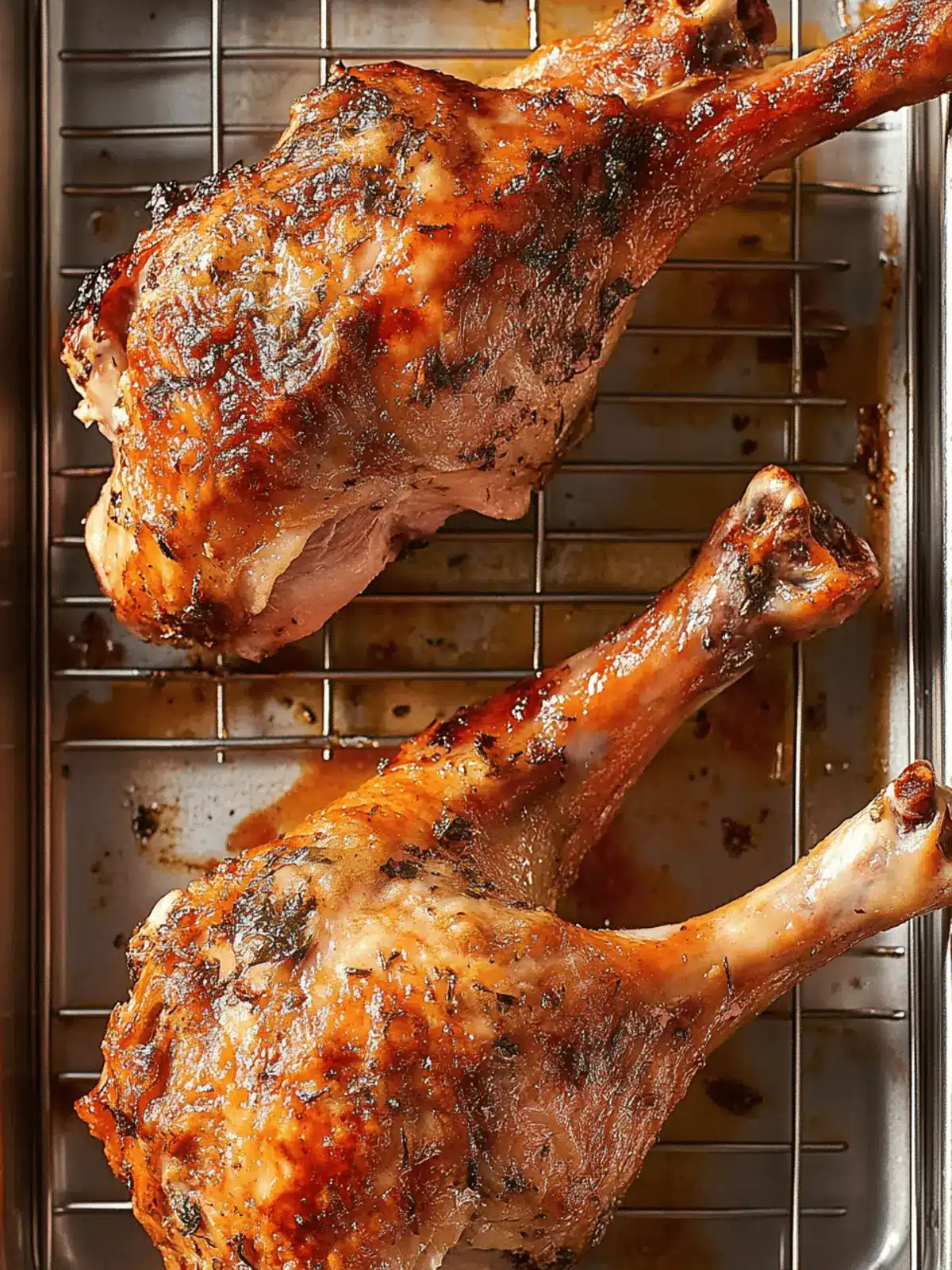
Why Choose Roasted Turkey Leg for Thanksgiving?
Easy to Prepare: This roasted turkey leg recipe allows you to enjoy all the flavors of Thanksgiving without the stress of complicated techniques.
Unleashed Flavor: The blend of rosemary and thyme in the herb butter infuses the turkey with rich depth, creating an enticing aroma that beckons everyone to the table.
Fall-Off-the-Bone Tender: Slow cooking ensures the turkey legs are succulent and juicy, with meat that effortlessly pulls away from the bone.
Crispy Skin Delight: Broiling at the end gives you that perfect crispy, golden skin, adding a satisfying crunch to each mouthful.
Crowd-Pleasing Dish: Perfect for family gatherings, this show-stopping turkey leg dish is sure to impress guests and keep them coming back for more.
Versatile Options: You can easily adapt flavors with different herbs or spices, ensuring there’s always a delightful twist for every gathering.
Roasted Turkey Leg Ingredients
For the Herb Butter
• Unsalted Butter – Adds richness and flavor; margarine can work as a substitute if you’re out of butter.
• Chopped Fresh Rosemary – Provides aromatic herbaceous notes; use dried rosemary in a pinch, but the flavor won’t be as vibrant.
• Chopped Fresh Thyme – Adds earthiness and depth; dried thyme can be substituted, but use less because it’s more potent.
• Kosher Salt – Enhances overall flavor; sea salt is a great alternative for a different taste.
• Freshly Ground Black Pepper – Introduces spice; switch to white pepper for a milder flavor if you prefer.
For the Turkey Legs
• Turkey Drumsticks (skin-on, bone-in, 10-12 oz. each) – The main ingredient that delivers tenderness and juiciness; chicken legs could be substituted, but cooking times will vary.
Optional Flavor Enhancements
• Minced Garlic – Adds an extra layer of flavor to your herb butter; don’t hesitate to include it if you’re a garlic lover!
• Smoked Paprika – A sprinkle can provide a delightful smoky flavor; consider this option for a fun twist to your roasted turkey leg.
How to Make Roasted Turkey Leg
-
Preheat the Oven: Set your oven to 300°F (150°C) for a slow and gentle roast that guarantees tenderness.
-
Mix the Herb Butter: In a mixing bowl, combine room-temperature unsalted butter, chopped fresh rosemary, thyme, kosher salt, and freshly ground black pepper. This will create a fragrant and flavorful herb butter.
-
Rub the Herb Butter: Generously smear the herb butter over each turkey leg, making sure it gets into all the nooks and crannies for maximum flavor.
-
Wrap the Turkey Legs: Tightly wrap the seasoned turkey legs in aluminum foil to lock in moisture. This step is key for that fall-off-the-bone texture.
-
Roast the Legs: Place the wrapped legs on a wire rack or in a baking dish and roast them for 2 hours. This slow cooking will ensure they’re juicy and tender.
-
Crisp the Skin: After roasting, unwrap the turkey legs and set them under the broiler for 8 to 10 minutes, watching closely until the skin turns crispy and golden brown.
Optional: Garnish with extra fresh herbs for a pop of color before serving.
Exact quantities are listed in the recipe card below.
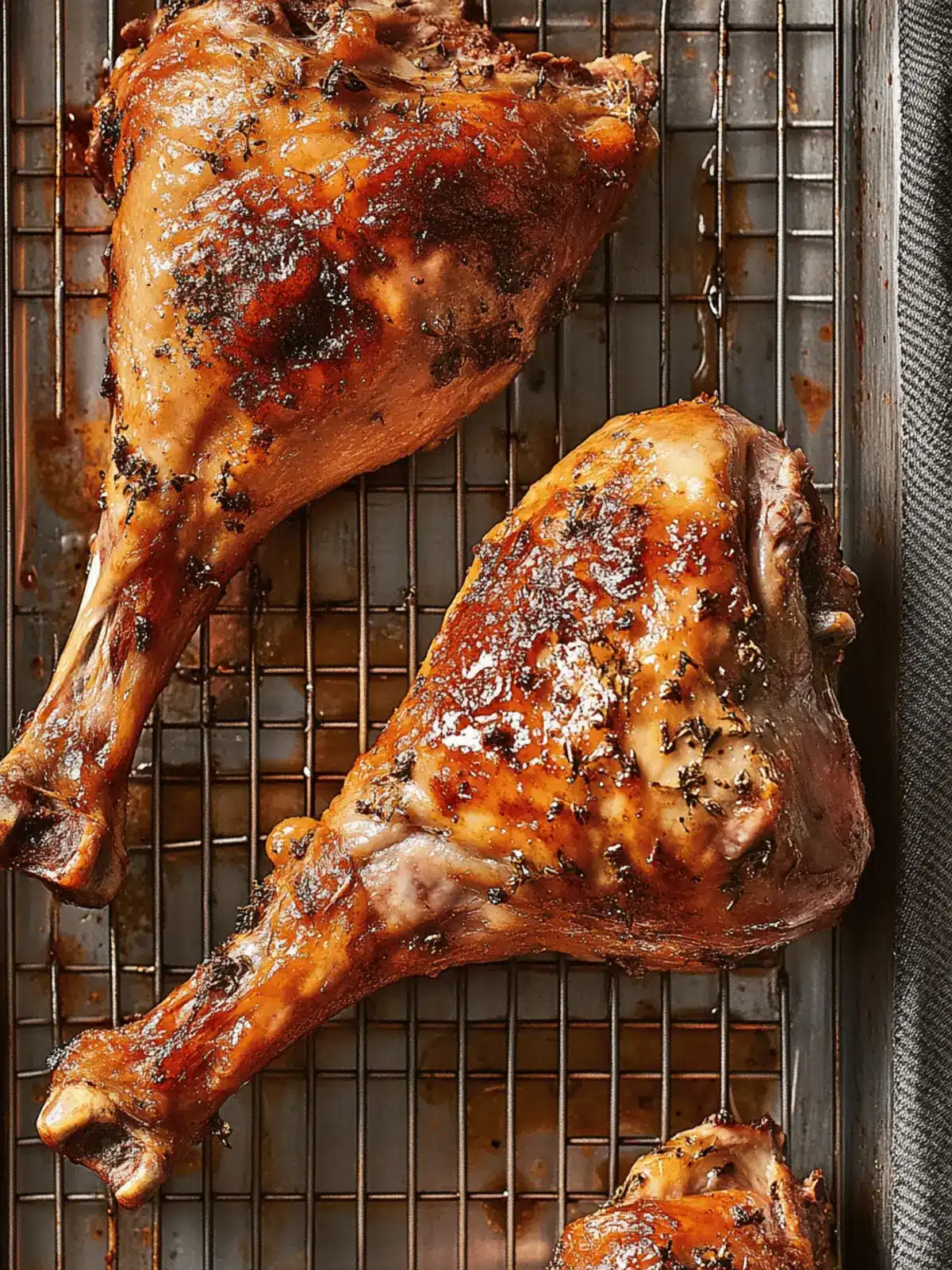
How to Store and Freeze Roasted Turkey Leg
Fridge: Store leftovers in an airtight container for up to 3 days; doing so keeps the meat fresh and ready for quick meals.
Freezer: For longer storage, wrap turkey legs tightly in foil and place them in a freezer-safe container for up to 3 months.
Reheating: When you’re ready to enjoy leftovers, reheat in the oven at 350°F (175°C) until warmed through, ensuring tenderness remains intact.
Tip: If freezing, ensure the turkey legs cool completely before sealing to prevent ice crystals and maintain the delicious flavor of the roasted turkey leg.
Expert Tips for Roasted Turkey Leg
• Use Fresh Herbs: Fresh rosemary and thyme elevate the flavor significantly. Dried herbs can work in a pinch but lack the aromatic punch.
• Don’t Rush the Cook: Allow the turkey legs to roast slowly at 300°F. This ensures the meat is tender and easily pulls away from the bone.
• Watch the Broiler: When broiling for that crispy skin, stay nearby. It can go from golden to burnt in just seconds!
• Rest for Juiciness: Let the roasted turkey legs rest for 10-15 minutes after cooking. This step helps the meat retain its juices, making every bite flavorful.
• Perfect Wrapping: Ensure the foil is tightly sealed around the turkey legs. This will lock in moisture and develop that exquisite fall-off-the-bone texture.
What to Serve with Roasted Turkey Leg?
Pairing the perfect sides with your turkey leg will enhance your Thanksgiving feast and create a warm, inviting atmosphere.
-
Creamy Mashed Potatoes: A classic comfort food, the buttery, smooth texture contrasts beautifully with the juicy turkey leg, creating a heavenly combo.
-
Green Bean Casserole: The crunch of green beans and the creamy sauce offer a delightful flavor contrast, making each bite a delightful medley.
-
Homemade Cranberry Sauce: The tartness of fresh cranberries cuts through the savory richness of the turkey, adding a refreshing zing that elevates the meal.
-
Stuffing: A traditional favorite, the herbs and spices in stuffing soak up the juices from the turkey, enriching each forkful with flavors that complement beautifully.
-
Honey Glazed Carrots: Sweet and tender, these carrots bring a pop of color to your plate and balance the savory notes of the turkey leg.
-
Roasted Brussels Sprouts: The nutty flavor of roasted Brussels sprouts adds an earthy element, and their crispiness provides a satisfying texture that pairs well.
-
Pumpkin Pie: Finish your meal on a sweet note with this classic dessert. The warm spices and creamy texture make for a delightful end to your Thanksgiving dinner.
-
Apple Cider: A warm glass of apple cider is the perfect drink to accompany your meal, offering a sweet autumnal note that complements the hearty flavors of the turkey.
Roasted Turkey Leg Variations
Ready to make this recipe your own? Explore these delightful twists that will inspire your culinary creativity and elevate your Thanksgiving feast!
-
Herb Swap: Experiment with fresh sage or oregano for an entirely different flavor profile while maintaining that fragrant herbal essence.
-
Garlic Lovers: Add 2-3 minced garlic cloves to the herb butter for an irresistible aroma that will fill your home with cozy warmth.
-
Smoky Flavor: A sprinkle of smoked paprika mixed into your herb butter will introduce a tantalizing smoky twist that your guests will adore.
-
Zesty Lemon: Squeeze some fresh lemon juice over the turkey legs before wrapping; this brightens flavors and adds a refreshing tang.
-
Spicy Kick: Include a pinch of cayenne pepper or red pepper flakes in the herb mixture for those who prefer a little heat in their Thanksgiving turkey.
-
Balsamic Glaze: Drizzle balsamic glaze over the turkey legs during the last minutes of broiling for a sweet and tangy finish.
-
Maple Glaze: Brush a mixture of maple syrup and Dijon mustard over the turkey legs before broiling to create a sweet and savory caramelized crust.
-
Vegetable Roasting: Add root vegetables like carrots and potatoes to the baking dish to roast alongside the turkey legs; they’ll soak up all those delicious juices!
Make Ahead Options
These slow-cooked turkey legs are a fantastic choice for busy cooks looking to simplify their Thanksgiving preparations! You can season and wrap the turkey legs in foil up to 24 hours in advance. Just refrigerate them after seasoning to prevent any loss in flavor. When it’s time to cook, simply pop them in the oven as directed; the slow-cooking method retains their juicy tenderness and ensures they are just as delicious as when prepared fresh. Additionally, if you have leftovers, they’ll keep well in an airtight container for up to 3 days in the refrigerator—great for quick meals during your busy week!
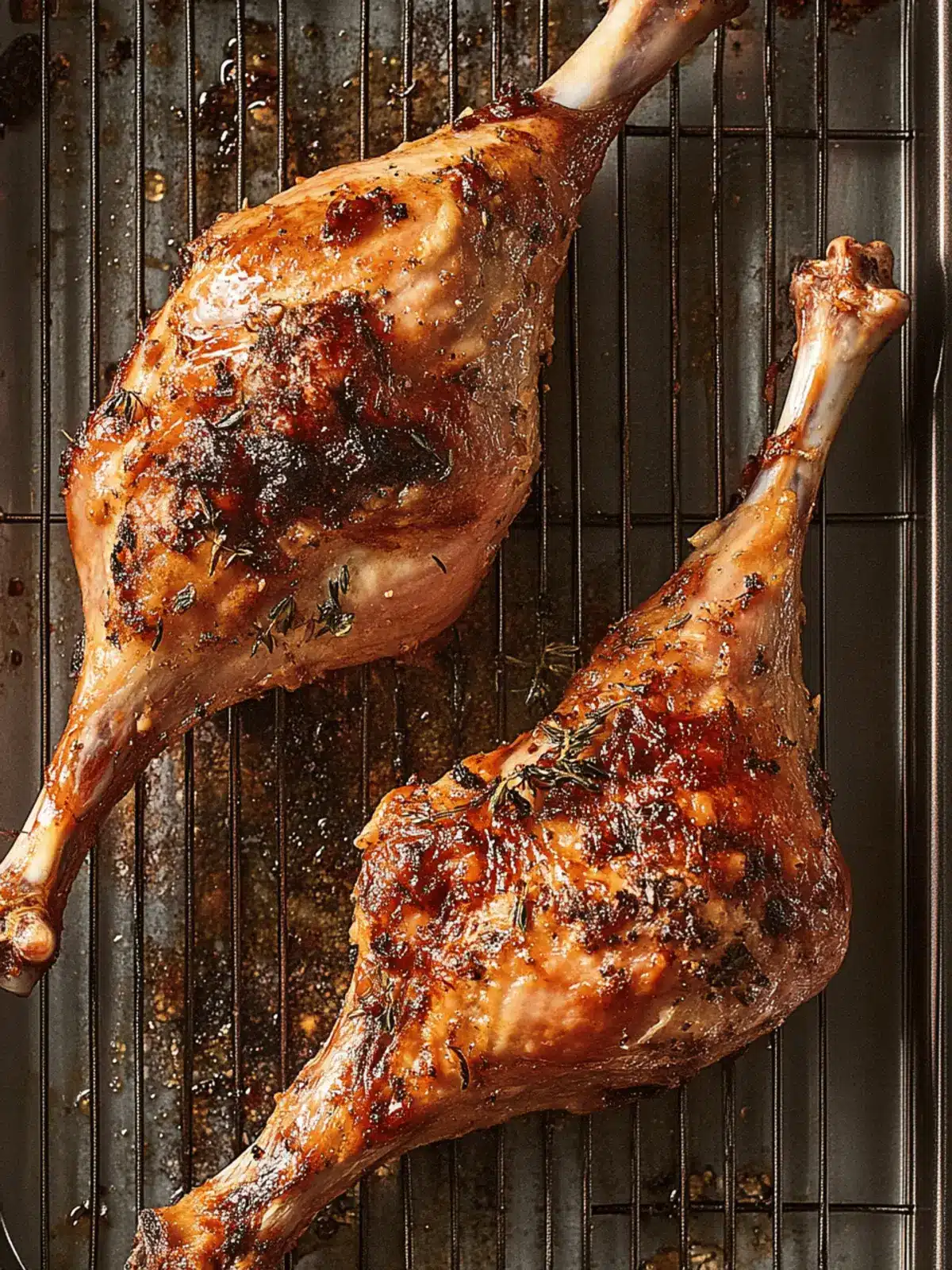
Roasted Turkey Leg Recipe FAQs
How do I select the best turkey legs for roasting?
Absolutely! When choosing your turkey legs, look for skin-on, bone-in legs that feel firm to the touch. The skin should be pale with no dark spots or blemishes. For the best flavor, select legs that are 10-12 oz. each, ensuring they’re fresh and not past their sell-by date.
How should I store leftover roasted turkey legs?
Leftovers can be stored in an airtight container in the fridge for up to 3 days. Be sure to let the turkey cool completely before sealing it away to preserve its juicy goodness. Reheating is best done in the oven to maintain texture and flavor!
Can I freeze roasted turkey legs, and if so, how?
Very! You can freeze roasted turkey legs for up to 3 months. To do this, let them cool completely, then wrap them tightly in aluminum foil to prevent freezer burn. For extra protection, place the wrapped legs in a freezer-safe container or a resealable plastic freezer bag. This method keeps the flavors intact!
What should I do if my turkey legs aren’t cooked through?
No worries! If your turkey legs aren’t fully cooked after the recommended roasting time, return them to the oven and continue cooking at 300°F (150°C). Check for doneness with a meat thermometer; they should reach an internal temperature of 165°F (74°C). If you prefer, you can also increase the roasting temperature slightly to expedite the cooking process, but remember to monitor closely for juiciness!
Are there any dietary considerations I should be aware of?
Absolutely! This roasted turkey leg recipe is generally safe for most people, but if you have specific allergies, be cautious with the herb butter. You can easily substitute the butter with dairy-free alternatives if needed. Furthermore, always be mindful of any seasoning herbs, as some individuals may have sensitivities to certain spices or herbs, particularly dried varieties.
Can I substitute other meats in this recipe?
Yes, indeed! If turkey legs aren’t available, chicken legs can be a great substitute. Keep in mind that chicken legs may cook faster than turkey legs, so adjust your cooking time accordingly. Generally, chicken legs should take about 1.5 to 2 hours at 300°F (150°C) to ensure they’re juicy and flavorful, just like those delicious roasted turkey legs!
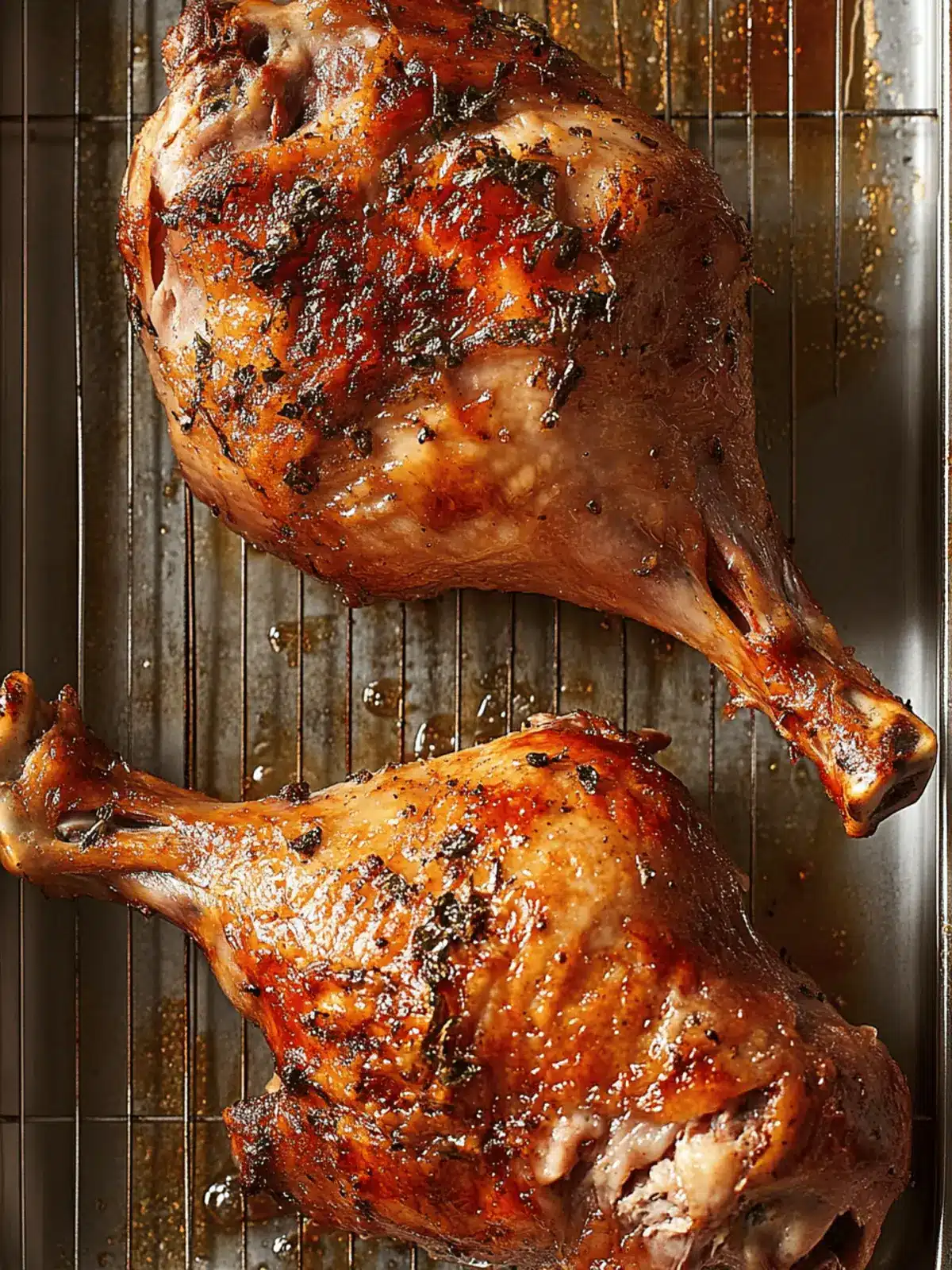
Savory Roasted Turkey Leg Recipe for Effortless Thanksgivings
Ingredients
Equipment
Method
- Preheat the Oven: Set your oven to 300°F (150°C) for a slow and gentle roast that guarantees tenderness.
- Mix the Herb Butter: In a mixing bowl, combine room-temperature unsalted butter, chopped fresh rosemary, thyme, kosher salt, and freshly ground black pepper to create the herb butter.
- Rub the Herb Butter: Generously smear the herb butter over each turkey leg, making sure it gets into all nooks and crannies for maximum flavor.
- Wrap the Turkey Legs: Tightly wrap the seasoned turkey legs in aluminum foil to lock in moisture.
- Roast the Legs: Place the wrapped legs on a wire rack or in a baking dish and roast them for 2 hours.
- Crisp the Skin: After roasting, unwrap the turkey legs and set them under the broiler for 8 to 10 minutes until the skin is crispy and golden brown.
- Optional: Garnish with extra fresh herbs for a pop of color before serving.