
There’s a certain charm in combining two beloved dishes, and that’s exactly what Rabokki accomplishes—merging the heartiness of Korean ramen and the delightful chewiness of tteokbokki. Imagine sizzling fish cakes mingling with tender rice cakes in a bubbling pot of spicy, savory broth that fills your kitchen with irresistible aromas.
After a long week filled with fast food runs, I discovered this vibrant recipe that has brought back the joy of homemade cooking. With just a handful of ingredients commonly found in my pantry, I recreated this street food favorite that feels both cozy and indulgent. Trust me; your tastebuds will embark on a delicious adventure that transports you straight to the bustling streets of Seoul.
Are you ready to discover a meal that’s not only quick to prepare but also a total crowd-pleaser? Let’s dive into the delightful world of Rabokki!
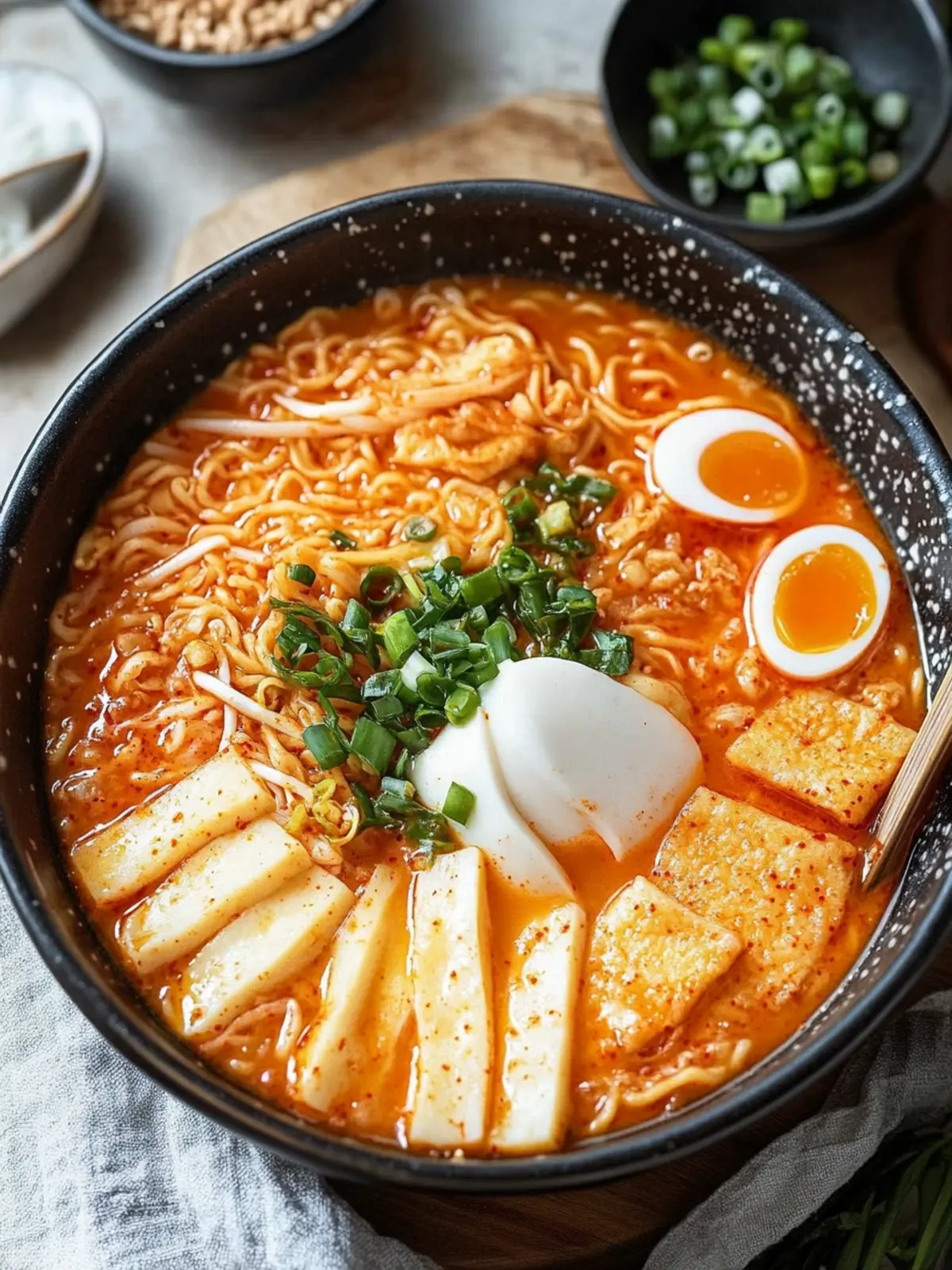
Why love Korean Ramen and Tteokbokki?
Simplicity at its best: This recipe is super easy to follow, making it accessible for cooks of all skill levels.
Rich, savory flavor: The combination of gochujang and dashi creates a mouthwatering broth that beautifully complements the chewy tteok and ramen.
Quick and satisfying: Perfect for busy weeknights, Rabokki comes together in no time, allowing you to enjoy a homemade dish without the fuss.
Crowd-pleasing treat: Whether you’re entertaining friends or feeding the family, this dish is a hit with everyone.
Customizable options: Feel free to add your favorite veggies or proteins to make this dish uniquely yours.
Elevate your mealtime by exploring other comforting Korean dishes like Samgyeopsal.
Korean Ramen and Tteokbokki Ingredients
• Experience the magic of Rabokki with these essential ingredients!
For the Broth
- Water – the base for your delicious broth.
- Dashi Powder – adds umami depth and richness to your dish.
- Korean Hot Pepper Paste (Gochujang) – brings that signature spice and tang.
- Korean Hot Pepper Flakes (Gochugaru) – for an extra kick of heat.
- Sugar – balances out the flavors for a harmonious taste.
- Soy Sauce – enhances the savory notes in your broth.
- Garlic – freshly chopped for an aromatic punch.
For the Noodles and Tteok
- Korean Rice Cakes (Tteok) – essential for that chewy texture loved in tteokbokki.
- Ramen Noodles – quick-cooking noodles that soak up all the amazing flavors.
- Korean Fish Cakes (Eomuk) – adds heartiness and authentic street food vibes.
For the Veggies and Garnish
- Cabbage – adds tenderness and nutrients to balance the dish.
- Spring Onion – sliced diagonally for a fresh, crunchy topping.
- Boiled Eggs – provides protein and creaminess, perfect for topping.
- Sesame Oil – just a touch gives a nutty aroma to finish.
- Sesame Seeds – toasted or fresh for a delightful crunch on top.
Unlock the full flavor potential of your Korean Ramen and Tteokbokki with these carefully selected ingredients!
How to Make Korean Ramen and Tteokbokki
-
Combine the broth ingredients: In a pot, mix the water, dashi powder, gochujang, gochugaru, sugar, soy sauce, and garlic. Bring it to a boil, letting the fragrant aromas fill your kitchen.
-
Add the rice cakes: Gently toss in the Korean rice cakes and cook them until they soften, which should take about 5-7 minutes. They should be pleasantly chewy and ready to absorb the flavors.
-
Stir in the noodles and fish cakes: Add the ramen noodles, fish cakes, cabbage, and spring onion to the pot. Cook until the noodles are tender, around 3-4 minutes, ensuring everything is well combined and heated through.
-
Serve with flair: Ladle the rich Rabokki into bowls, topping each with boiled eggs, reserved spring onion, a drizzle of sesame oil, and a sprinkle of sesame seeds for that perfect finishing touch.
Optional: Add a side of pickled radish for a refreshing contrast.
Exact quantities are listed in the recipe card below.
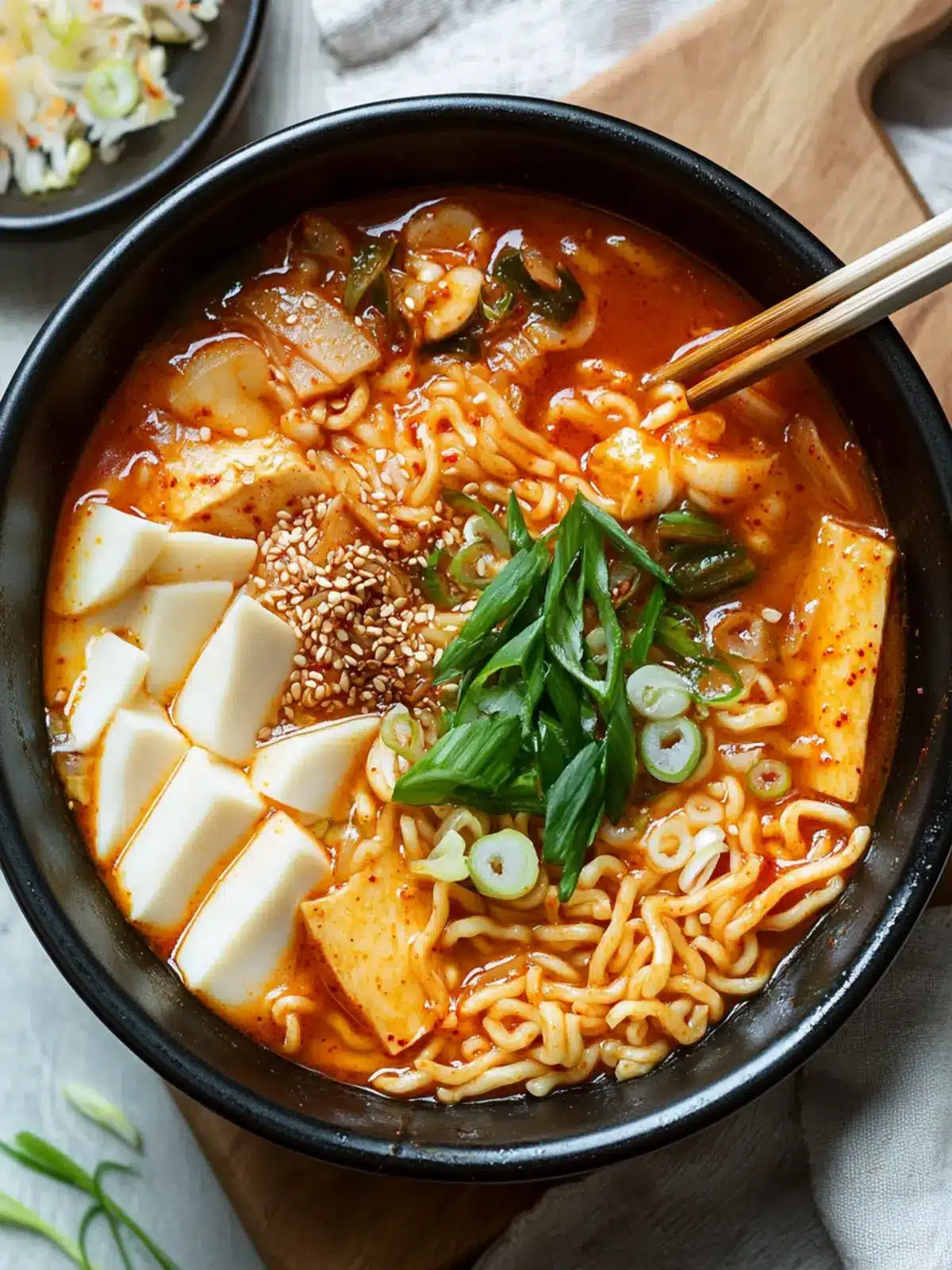
What to Serve with Korean Ramen and Tteokbokki?
Elevate your dining experience with delightful pairings that complement the bold flavors of this comforting dish.
-
Spicy Kimchi: This tangy side dish adds a crunchy contrast to the warm, savory flavors of Rabokki.
-
Savory Scallion Pancakes: Their crispy texture and mild onion flavor make a perfect accompaniment to soak up the delicious broth.
-
Refreshing Cucumber Salad: The cool, crisp cucumbers coated in a light vinegar dressing provide a refreshing palate cleanse between bites.
-
Korean Fried Chicken: Juicy, crispy, and coated in a sweet-spicy sauce, it’s a crowd-pleaser that pairs beautifully with the rich Rabokki.
-
Soft Tofu Soup: This creamy, comforting dish can balance the spice and serve as a warm, hearty addition to your meal.
-
Fruit-Infused Soju: For adults, a light, fruity soju can enhance the experience, creating a delightful fusion of flavors.
Offering a range of delicious options will ensure every bite is a memorable one!
Expert Tips for Korean Ramen and Tteokbokki
-
Choosing Rice Cakes: Use fresh or frozen Korean rice cakes for the best texture. Dried cakes may require extra soaking and won’t achieve the same chewy consistency.
-
Spice Levels: Adjust the amount of gochujang and gochugaru to suit your heat preference. Start with less if you’re sensitive to spice and increase gradually.
-
Add Flavor: Incorporating other proteins like sliced pork or shrimp can elevate your Rabokki even further, making it heartier and more satisfying.
-
Avoid Overcooking: Keep an eye on both the ramen noodles and fish cakes; they can overcook quickly. Aim for a tender texture, which complements the chewy tteok.
-
Garnish Generously: Don’t skip the garnishes! They add color and layers of flavor, making your Korean Ramen and Tteokbokki not only delicious but visually appealing too.
Storage Tips for Korean Ramen and Tteokbokki
Fridge: Store leftover Rabokki in an airtight container for up to 3 days. Ensure it cools to room temperature before sealing to prevent condensation.
Freezer: If you want to keep it longer, freeze portions in airtight containers for up to 1 month. Note that the texture of the rice cakes may change upon reheating.
Reheating: To enjoy your frozen Rabokki, thaw overnight in the fridge, then reheat on the stove over low heat, adding a splash of water to revive the sauce.
Room Temperature: Do not leave Rabokki out at room temperature for more than 2 hours to ensure food safety.
Korean Ramen and Tteokbokki Substitutions
Feel free to mix things up with these tasty variations that spark creativity in your kitchen!
-
Vegetable Boost: Add bell peppers or zucchini for extra crunch and vitamins. They will bring a sweet touch that complements the savory broth.
-
Protein Picks: Substitute the fish cakes with tofu or chicken for a leaner option. This adds more texture and makes the dish heartier.
-
Gluten-Free: Use gluten-free ramen noodles and tamari instead of soy sauce for a delightful gluten-free meal. You’ll still get all the wonderful flavors!
-
Creamy Twist: Stir in a splash of coconut milk for a rich, creamy broth that brings a unique twist to your Rabokki experience. It’s delicious!
-
Herb Infusion: Fresh cilantro or basil can lighten up the dish and add a burst of freshness. Just sprinkle them on top just before serving!
-
Heat Variations: Want it spicier? Increase the gochugaru or add sliced fresh chili peppers for an extra kick that fire enthusiasts will adore.
-
Umami Upgrade: Sprinkle in some mushroom powder or add shiitake mushrooms for a deep umami flavor that elevates the soup’s profile. It’ll transport you to new taste realms!
-
Noodle Fun: Swap out ramen for soba noodles or udon for a different texture and taste twist. Both options will absorb those yummy flavors beautifully.
Make Ahead Options
These Korean Ramen and Tteokbokki are perfect for meal prep aficionados! You can prepare the flavorful broth (water, dashi powder, gochujang, gochugaru, sugar, soy sauce, and garlic) up to 24 hours in advance by combining those ingredients in a sealed container and refrigerating to enhance the flavors. The rice cakes, fish cakes, and chopped cabbage can also be prepped up to 3 days in advance; simply store them in the fridge in airtight containers. When you’re ready to serve, cook the broth until boiling, add the prepped ingredients and noodles, and finish with boiled eggs and sesame oil. This way, you’ll have a comforting dish ready to enjoy with minimal effort, just as delicious as if made from scratch!
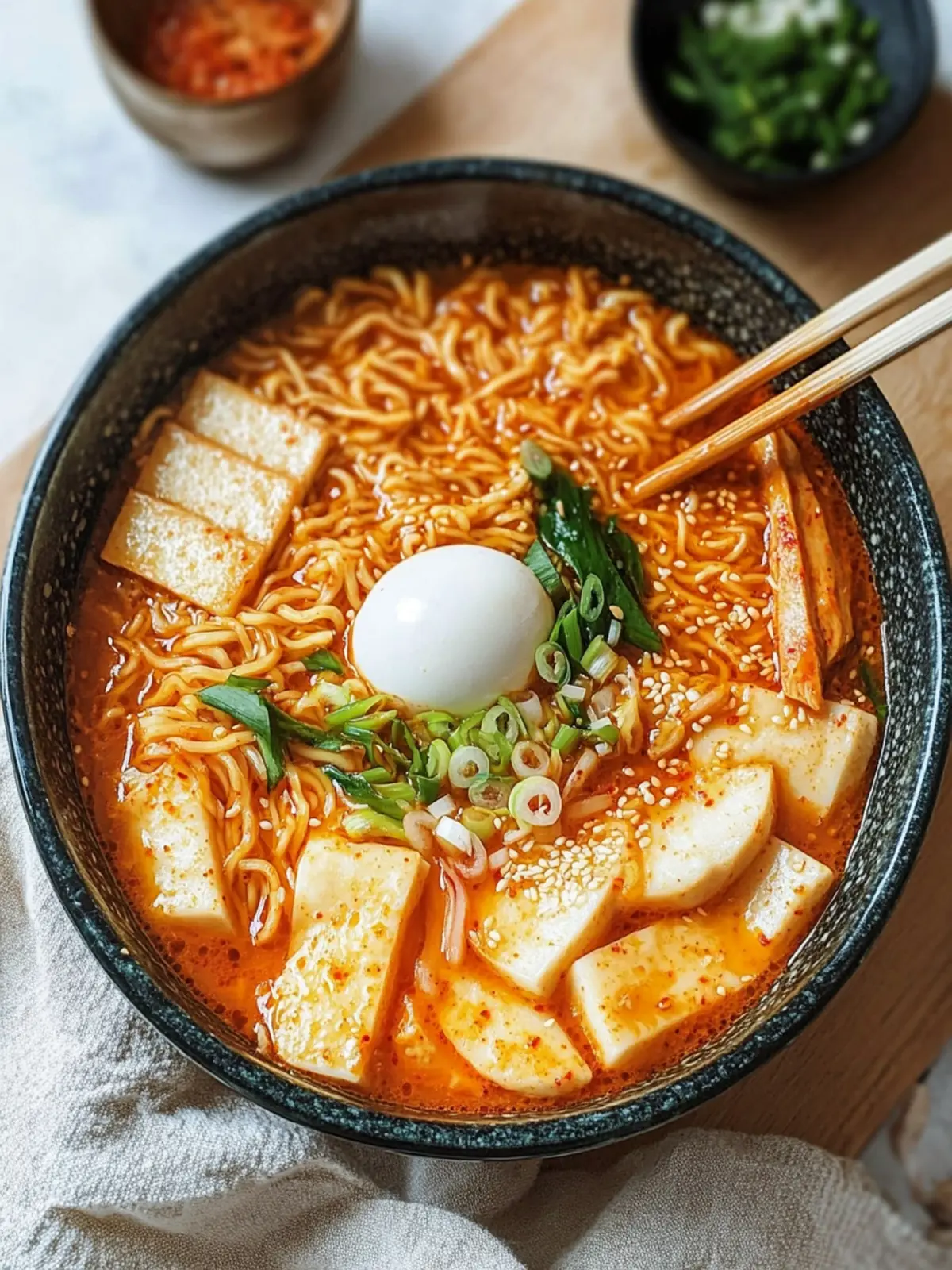
Rabokki Recipe FAQs
What type of rice cakes should I use for Rabokki?
You should opt for fresh or frozen Korean rice cakes (tteok) for the best results. Dried rice cakes can be too hard and require extra soaking, which may not provide the delightful chewiness that makes this dish so enjoyable!
How do I store leftover Rabokki?
Store any leftover Rabokki in an airtight container in the fridge for up to 3 days. Let it cool to room temperature before sealing to prevent moisture build-up. Always check for any off smells or discoloration before consuming.
Can I freeze Rabokki and how?
Absolutely! To freeze Rabokki, allow it to cool completely, then portion it into airtight containers. It can be stored in the freezer for up to 1 month. When you’re ready to enjoy it, thaw it overnight in the fridge and reheat gently on the stove, adding a splash of water to bring back the sauce’s creaminess.
What can I do if the noodles are overcooked?
If your ramen noodles become overcooked and mushy, there’s no need to panic! You can try adding fresh vegetables or extra broth to help absorb the texture. If the dish is too soupy, reduce it on the heat until it thickens up a bit.
Are there any dietary considerations I should be aware of?
Yes, always be cautious of allergies! Rabokki includes fish cakes, which may not be suitable for those with seafood allergies. For a vegetarian or vegan twist, use tofu instead of fish cakes, and ensure your dashi powder is plant-based or substitute with mushroom broth for that umami flavor.
Can I customize my Rabokki with other ingredients?
Very much so! Feel free to add your favorite proteins like chicken, pork, or even tofu. You can also toss in extra vegetables like bell peppers or spinach for added nutrition and color. The more the merrier when it comes to making this dish your own!
Enjoy all the delicious variations of Korean Ramen and Tteokbokki!
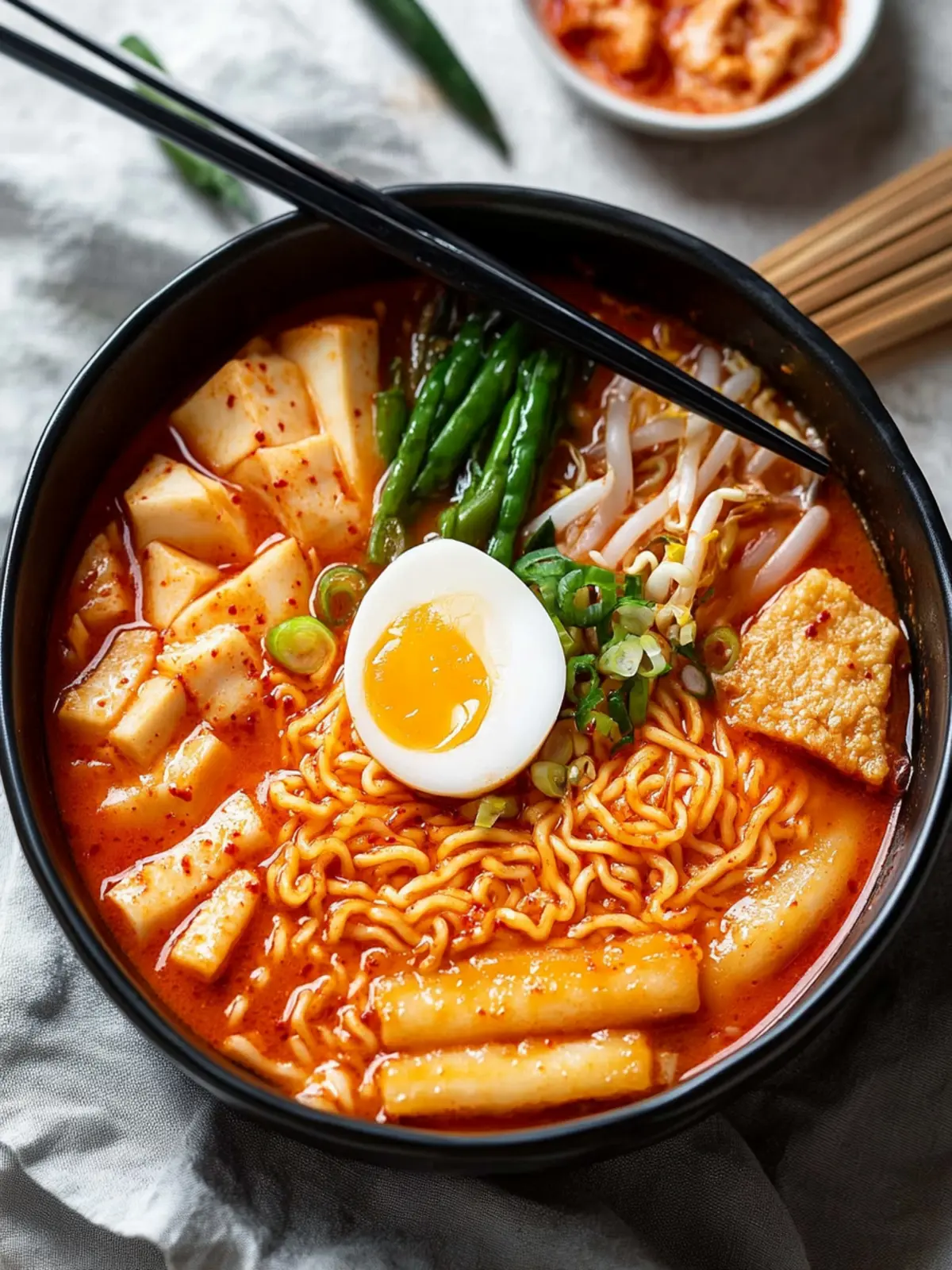
Savor the Flavor of Korean Ramen and Tteokbokki Delights
Ingredients
Equipment
Method
- Combine the broth ingredients: In a pot, mix the water, dashi powder, gochujang, gochugaru, sugar, soy sauce, and garlic. Bring it to a boil, letting the fragrant aromas fill your kitchen.
- Add the rice cakes: Gently toss in the Korean rice cakes and cook them until they soften, which should take about 5-7 minutes.
- Stir in the noodles and fish cakes: Add the ramen noodles, fish cakes, cabbage, and spring onion to the pot. Cook until the noodles are tender, around 3-4 minutes.
- Serve with flair: Ladle the rich Rabokki into bowls, topping each with boiled eggs, reserved spring onion, a drizzle of sesame oil, and a sprinkle of sesame seeds.